
In all types of seizures, the goal is to protect the person from harm until full awareness returns.
Also note the general rule:
The less done to a person during a relatively brief seizure, the better.
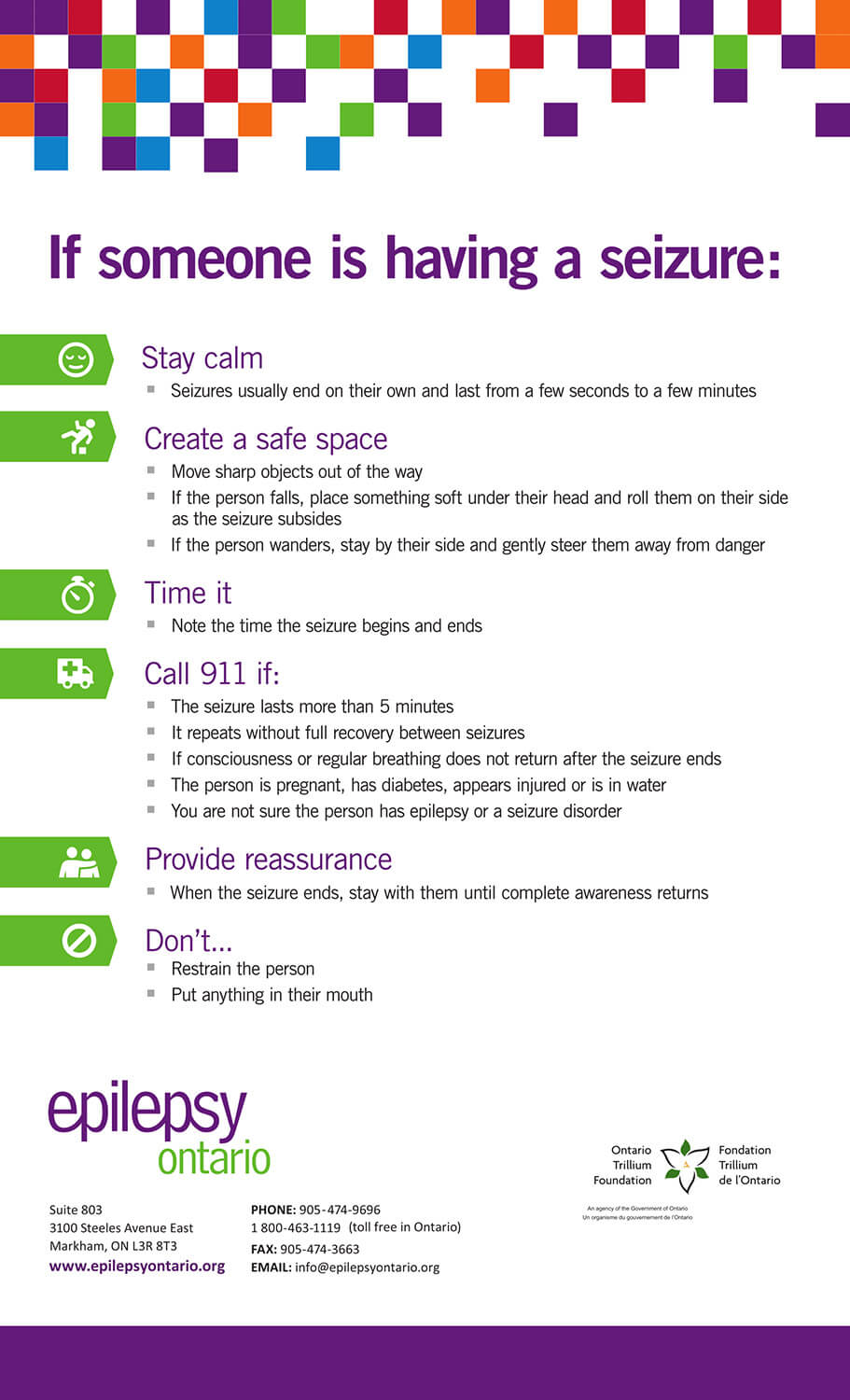
Download our printable poster.
Download and print this clear, easy-to-follow poster that shows exactly what to do if someone is having a seizure—perfect for classrooms, workplaces, and community spaces.
If you are living with or caring for someone with a seizure disorder who has other medical problems, check with the doctor about how to respond when a seizure occurs.
Find out whether the doctor should be notified every time or just in certain circumstances. Ask whether or when you should call an ambulance and if there are any special warning signals to watch for.
First Aid for Convulsive Seizures
Characterized by stiffening, falling, jerking
- Keep calm.
Seizures may appear frightening to the onlooker, They last only a few minutes and generally do not require medical attention. Remember that a person having a seizure is probably unaware of his/her actions and may not hear you. - Protect from further injury.
If necessary, ease the person to the floor.
Move any hard, sharp or hot objects well away.
Protect the person’s head and body from injury.
Loosen any tight neckwear. - Do not restrain the person.
- Do not insert anything in the mouth.
The person is not going to swallow their tongue. Attempting to force open the mouth may break the teeth or cause other oral injuries. - Roll the person on their side after the seizure subsides.
This enables saliva to flow from the mouth, helping to ensure an open air passage.
If there is vomit, keep the person on their side and clear out their mouth with your finger. - Talk gently to the person.
After any type of seizure, comfort and re-assure the person to assist them in re-orienting themselves.
The person may need to rest of sleep.
If the person wanders, stay with them and talk gently to them.
First Aid for Non-Convulsive Seizures
Characterized by altered mental status and impaired awareness
- Stay with the person.
Let the seizure take its course.
Speak calmly and explain to others what is happening. - Move dangerous objects out of the way.
- DO NOT restrain the person.
- Gently guide the person away from danger or block access to hazards.
- After the seizure, talk reassuringly to the person.
Stay with the person until their complete awareness returns.
If a seizure lasts longer than 5 minutes, or repeats without full recovery — seek medical assistance immediately. Although this rarely occurs, status epilepticus is life-threatening. It is a serious medical emergency.
Seizure Types
Seizures are divided into two main categories: focal and generalized. The category is determined by the location of the seizure activity within the brain at the beginning of the seizure.